





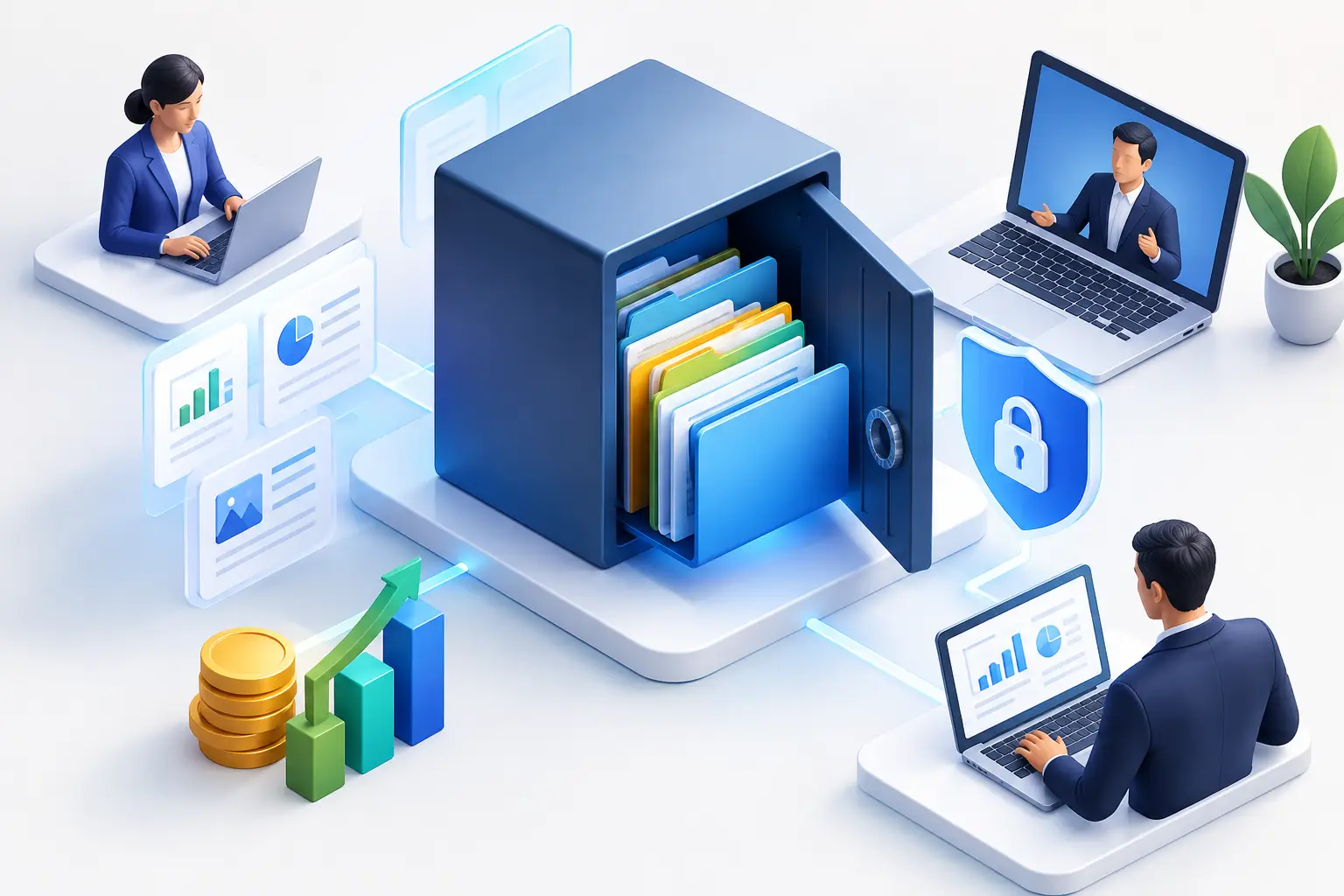
Investor interest can fade quickly when diligence starts with scattered attachments, outdated numbers, and unanswered follow-up questions. To build an investor data room that supports a real raise, treat it as part of your deal execution process - not a folder you assemble after an investor asks for it. The right room gives investors a clear path from first interest to informed conviction while keeping sensitive information controlled.
Build an investor data room before diligence begins
A data room is a secure, organized workspace where prospective investors can review the information behind your pitch. It should validate the claims in your deck, answer predictable diligence questions, and make it easy to identify what requires a live discussion.
The timing matters. Founders who wait until a lead investor requests documents often rush to fill gaps, circulate different versions of the same file, and lose control of who has seen what. Preparing early lets your team review the story, identify missing records, and decide which materials belong in initial diligence versus later-stage access.
Your room does not need every internal document on day one. Early-stage investors understand that a young company will not have years of audited financials or a large legal archive. They do expect clear evidence that the business is organized, the opportunity is real, and leadership understands the risks ahead.
Start with the investor's decision path
Investors do not review documents in the order founders create them. They move from the opportunity to proof, then from proof to risk. Design your room around that sequence.
Start with a short overview that orients the reviewer. Include the current pitch deck, a one-page company summary, your fundraising target, and a simple index explaining the folder structure. A concise note on the latest update date helps investors know whether they are reviewing current information.
Next, provide the materials that support your commercial case: customer traction, market context, pipeline quality, product evidence, and financial performance. Then make governance, legal, and ownership records available at the appropriate point in the process. This order keeps early diligence focused and avoids exposing highly sensitive information before an investor has demonstrated serious intent.
A data room should reduce the work required to reach a decision. If a reviewer must search through dozens of files to understand revenue, ownership, or customer concentration, your organization becomes part of the investment risk.
Create a practical folder structure
The exact structure depends on your stage, business model, and raise. A pre-seed software company needs a different set of materials than a growth-stage company with enterprise contracts. Still, most investor data rooms benefit from a consistent core structure:
- Company overview: Pitch deck, company profile, fundraising terms or target, and key milestones.
- Financials: Historical profit and loss statements, balance sheet, cash position, burn rate, budget, operating model, and use of proceeds.
- Traction and commercial evidence: Revenue metrics, customer cohorts, pipeline, retention data, sales materials, major customer agreements, and case studies where appropriate.
- Product and technology: Product roadmap, architecture overview, security documentation, intellectual property records, and technical dependencies.
- Team and governance: Founder and leadership bios, organizational chart, board materials, incorporation documents, cap table, option plan, and shareholder agreements.
- Legal and risk: Material contracts, litigation or claims disclosures, regulatory considerations, insurance, privacy policies, and known risk items.
Keep the naming convention simple. Use dates in file names, label drafts clearly, and avoid final-final-v3 language. For recurring materials, such as financial reports or investor updates, create a predictable cadence and archive prior versions rather than replacing them without context.
Make the financial story easy to test
Financial materials receive close attention because they connect your growth narrative to the amount of capital you are raising. Investors are usually less concerned with whether every projection is perfect than with whether the assumptions are transparent and internally consistent.
Your operating model should show the major drivers behind revenue, hiring, customer acquisition, gross margin, and cash needs. A marketplace business may need to explain liquidity, take rate, and supply-demand dynamics. A SaaS company should be ready to show retention, expansion, churn, and sales efficiency. A hardware or regulated business may need more detail on inventory, approvals, and deployment timelines.
Reconcile the core numbers across your deck, financial model, cap table, and data room. If annual recurring revenue differs between two documents, an investor will notice. Sometimes the difference is legitimate - for example, contracted ARR versus recognized revenue - but define the metric and explain it before it becomes a credibility issue.
Be direct about downside scenarios. Show how long the raise extends runway, what milestones the capital funds, and what changes if revenue lands below plan. Thoughtful sensitivity analysis signals operational discipline, not weakness.
Control access without slowing momentum
Security and speed need to work together. Give investors access based on their stage in the process, not through an all-or-nothing share link. Initial access can cover the pitch, core financials, traction, and high-level governance. More sensitive materials, including customer contracts, employee information, detailed security records, and legal correspondence, can be reserved for serious diligence after appropriate confidentiality steps.
Assign access by person, track activity, and remove permissions when a process ends. Avoid using personal email accounts or uncontrolled file-sharing folders for critical deal materials. Your team should know who has access, which version is current, and who is responsible for approving new uploads.
A secure digital workspace also creates a cleaner operating record. Instead of chasing files across email threads, founders can manage requests, share updates, and keep diligence activity connected to the investment conversation. Platforms such as FinReef are built around this connected workflow, bringing company presentation, investor engagement, and secure deal collaboration into one environment.
Anticipate questions instead of burying risks
A strong data room is not a sales brochure. Investors will assess the issues that could affect valuation, timing, or the ability to close. Attempting to hide material gaps usually creates more concern once they surface.
Prepare concise explanations for customer concentration, short runway, founder vesting, pending intellectual property assignments, regulatory exposure, churn, technical debt, or major contractual dependencies. Put sensitive disclosures in the appropriate restricted folder and provide context. The goal is not to over-document every operational challenge. It is to show that management sees the issue, understands its impact, and has a credible plan.
This approach also protects your team from inconsistent answers. When founders, finance leads, and advisors work from the same source materials, investor conversations move faster and follow-up requests become easier to handle.
Assign ownership and maintain the room through the raise
One person should own the data room, even if several functions contribute. That owner can be a founder, finance leader, chief of staff, or outside transaction advisor. Their role is to maintain the index, verify document status, coordinate approvals, and ensure investor requests are answered consistently.
Set a weekly review during an active raise. Update cash balances, pipeline summaries, customer wins, product releases, and material legal developments. Do not overwhelm every investor with a notification for minor edits, but flag changes that materially affect the investment case.
Before granting access, run a final investor-view check. Confirm that permissions work, documents open correctly, sensitive folders are restricted, and the first files a reviewer sees tell a coherent story. Small friction points can create unnecessary delays when a deal is moving quickly.
A well-run data room does more than organize documents. It shows investors how your company operates under scrutiny: prepared, transparent, and ready to execute. Build it with that standard, then use it as an active part of every serious capital conversation.