
A founder sends a promising investor a link to a shared folder. Three days later, the investor asks which financial model is current, whether the cap table has changed, and who else has viewed the files. The issue is not the quality of the startup. It is the operating environment around the raise.
The data room vs shared drive decision affects how confidently founders share sensitive materials and how efficiently investors complete due diligence. Both tools store documents and allow collaboration. But they are built for different levels of control, visibility, and transaction risk.
For an early conversation, a shared drive can be practical. Once an investor is reviewing financials, customer agreements, intellectual property, or ownership records, the process needs more structure. The right choice depends on the stage of the raise, the sensitivity of the information, and the expectations of the capital providers involved.
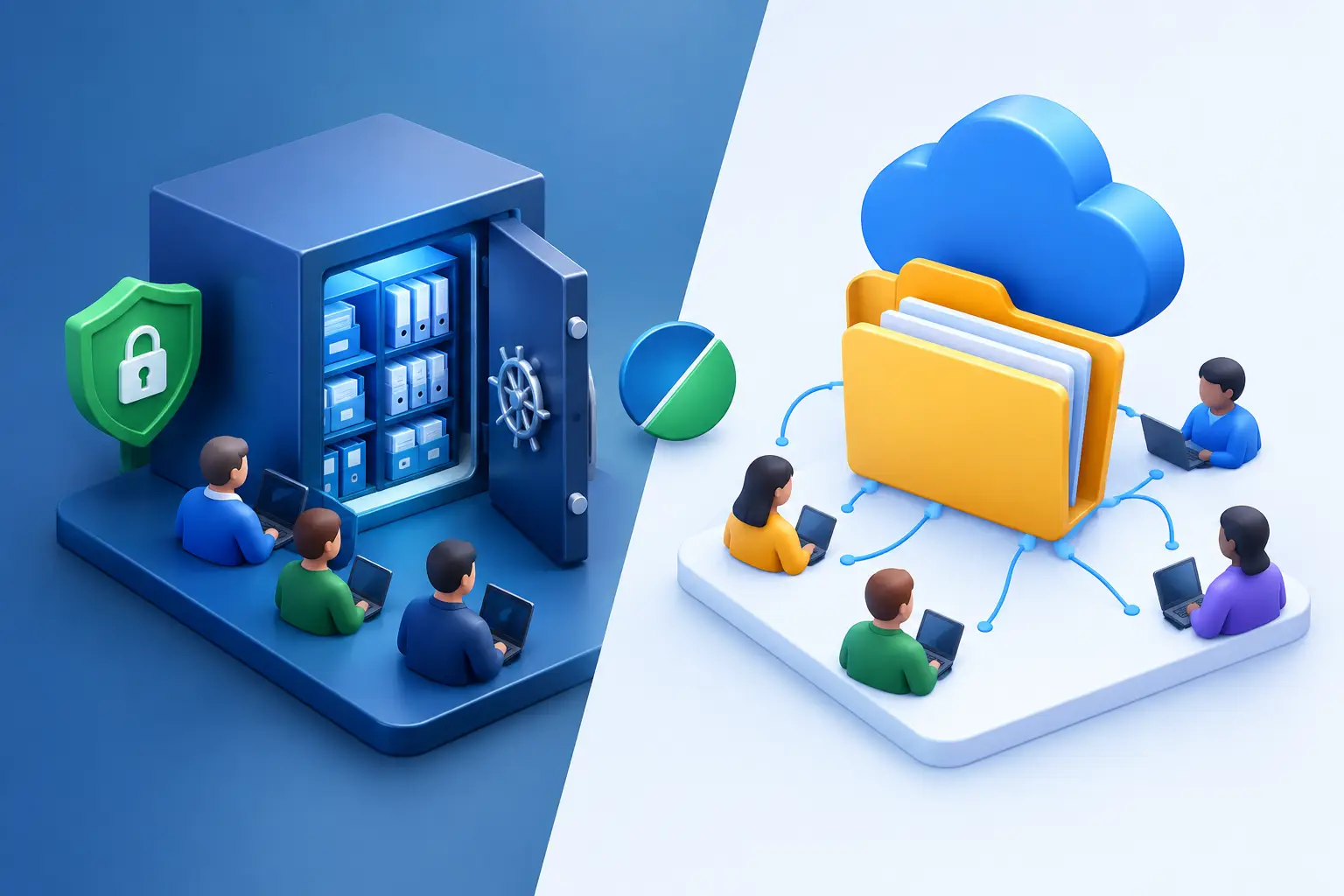
Data Room vs Shared Drive: The Core Difference
A shared drive is designed for ongoing team collaboration. Employees and external partners can create, edit, comment on, and organize files together. It works well when speed and day-to-day access matter more than formal oversight.
A virtual data room is designed for controlled document sharing during a transaction. It gives a company a dedicated environment to organize diligence materials, assign granular permissions, monitor document activity, and maintain a clear record of access. It is not simply a folder with tighter settings. It is a workspace built around review, disclosure, and deal progress.
That distinction matters in fundraising. Investors are not joining the company’s internal operating system. They are evaluating an opportunity and deciding whether to commit capital. Their access should be deliberate, relevant to their diligence stage, and easy to manage as conversations move forward.
Where a Shared Drive Works Well
A shared drive is often the right starting point for a small team preparing materials internally. Founders can coordinate a pitch deck, operating model, market research, product roadmap, and draft investor updates without adding another system to the workflow.
It can also work for low-risk external sharing. A founder may send a deck, one-page overview, or non-confidential product materials to a prospective investor through a controlled folder. At this stage, the goal is to create interest, not to disclose the full operating picture.
The advantages are familiar: most teams already know how to use shared drives, files can be uploaded quickly, and collaborators can work in the same documents. For early outreach, that convenience is valuable.
The trade-off is that collaboration tools do not always provide the transaction controls a fundraising process requires. A folder structure can become difficult to govern as more investors, advisers, and internal contributors enter the process. Permissions are often broad, outdated versions can remain accessible, and document activity may be too limited to show how serious an investor’s review actually is.
When a Shared Drive Creates Fundraising Risk
Fundraising materials become more sensitive as a conversation advances. Financial statements, tax records, customer concentration data, employment agreements, board materials, capitalization tables, and proprietary product information should not be distributed with the same assumptions as a pitch deck.
A shared drive can create friction when a founder needs to answer basic questions: Has this investor accessed the model? Which documents did they review? Can they download a copy? Did a former adviser retain access after the process ended? These questions are manageable with manual administration, but manual administration does not scale well during an active raise.
There is also a presentation issue. An unstructured folder filled with duplicate files, unclear naming conventions, and incomplete materials can slow diligence and weaken confidence. Investors understand that early-stage companies are still building systems. They also look for evidence that the team can organize critical information, respond to requests, and handle confidential discussions responsibly.
A shared drive is not inherently insecure. The concern is fit. It was built for working together, while investment diligence requires controlled access across parties with different interests and different rights to information.
What a Data Room Changes
A data room creates a more disciplined setting for the due diligence phase of a raise. Founders can group materials into logical categories such as corporate records, financial information, market materials, product and technology, legal documents, and commercial traction. Investors can find what they need without repeatedly requesting links or searching through a crowded folder.
Permissions can be set by user, investor group, or document category. That means a founder can share high-level materials broadly while limiting access to highly confidential documents until an investor reaches a defined stage. Access can be changed or removed promptly when a conversation pauses or concludes.
Visibility is another meaningful advantage. Data room activity can help founders understand whether an investor is engaging with the materials or merely expressing preliminary interest. Activity is not a substitute for a direct conversation, and it should not be overinterpreted. Still, it gives founders better context for follow-up and helps investors operate in a clear, professional review environment.
A data room also supports version control and disclosure discipline. When a financial model changes, the team can replace the prior version and maintain one reliable source of truth. When several internal stakeholders are responding to diligence requests, the company can avoid sending inconsistent documents through disconnected email threads.
For investors, this structure reduces avoidable work. A well-organized data room signals that the company respects the diligence process and is ready to move from interest to informed decision-making.
Choosing the Right Workspace for Your Raise
The best answer is often not to choose one tool for every purpose. Use a shared drive for internal preparation and early collaboration. Use a data room when external diligence begins or when documents require stronger controls.
For a pre-seed founder speaking with a small number of angels, a simple approach may be sufficient. The company might keep internal working files in a shared drive and provide selected investors with a concise package of approved materials. If the raise gains momentum, the founder can move qualified parties into a data room before sharing sensitive information.
For seed, Series A, growth financing, acquisitions, or more complex private placements, a data room becomes more compelling earlier in the process. These transactions often involve more stakeholders, deeper diligence, legal review, and longer decision cycles. The cost of confusion rises quickly when multiple investors are reviewing different versions of key documents.
Consider four practical factors before deciding. First, assess document sensitivity. The more confidential the content, the stronger the case for a data room. Second, consider the number of external parties. A single trusted investor creates a different access challenge than a broad outreach process involving angels, funds, advisers, and co-investors. Third, evaluate transaction complexity. A straightforward early-stage round needs less infrastructure than a financing with detailed commercial, legal, and financial diligence. Finally, consider your team’s ability to administer access consistently. If permission management depends on one busy founder remembering every change, a more controlled system reduces risk.
Build a Process That Keeps Momentum Moving
The workspace is only effective when the materials inside it are ready for review. Before inviting investors, organize documents around the questions they are likely to ask. Make sure the pitch deck, financial model, cap table, incorporation documents, major contracts, and key performance metrics are current and internally consistent.
Create a clear naming convention and remove drafts that do not belong in the investor-facing environment. If a document requires context, provide a short explanation rather than assuming the reviewer understands its significance. The goal is not to overwhelm investors with every internal file. It is to provide enough information for serious diligence without creating noise.
Founders should also define who can grant access, upload documents, and respond to requests. Investors benefit when they know where to direct questions, while founders avoid conflicting answers from multiple team members. In an ecosystem that connects discovery, pitch conversations, and secure deal collaboration, platforms such as FinReef can help keep that workflow connected rather than scattered across separate tools.
The strongest fundraising process feels controlled without feeling restrictive. Give investors a clear path from initial interest to informed review, and reserve your most sensitive information for the point when the relationship has earned that level of access.